Life in Limbo: Refugees Waiting for Europe’s Promise
In the camps and temporary shelters scattered across the Balkans, time moves differently. Days blur into weeks, weeks into months. For refugees waiting on asylum decisions, it can feel as though life has been paused between two worlds the one left behind, and the one that refuses to open its doors.
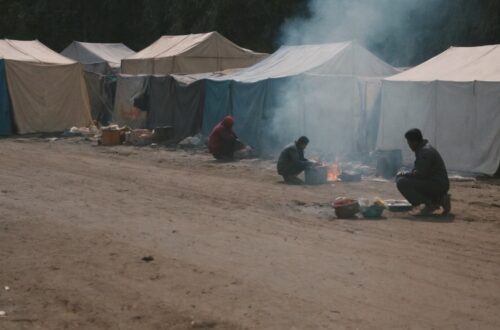
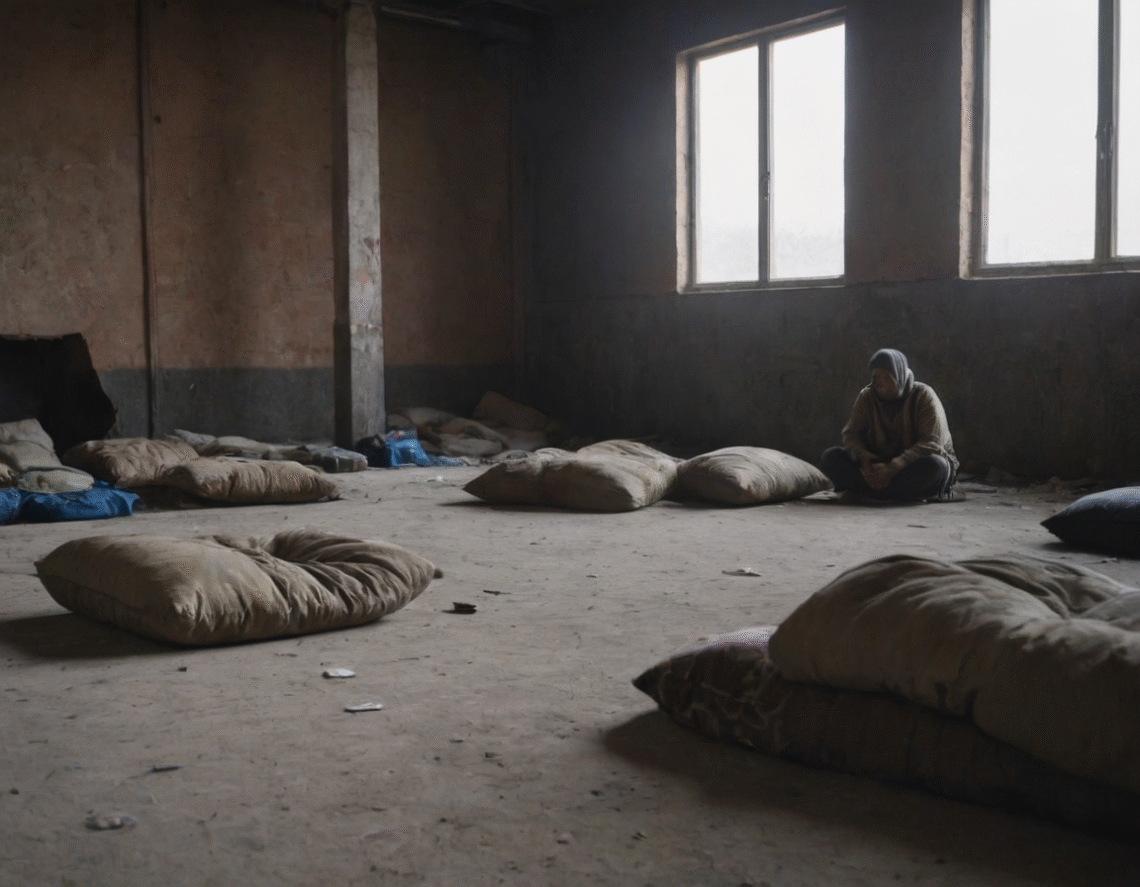
In an abandoned factory in Bosnia, families live behind plastic sheets and blankets hung as makeshift walls. Children play with whatever they find a plastic bottle, a torn football while their parents queue for food distributions or meet with NGO workers. Many have applied for asylum in several countries, only to be pushed back again and again.
Despite this uncertainty, hope refuses to die. Some learn the local language, volunteer with aid groups, or share tea with the newbies. Others keep journals, writing about the futures they still believe in the chance to study, to work, to belong.
“Every day we wait, we lose a little part of ourselves,” one young man from Afghanistan told me. “But we also become stronger. Because waiting teaches patience and survival.”
Life in limbo is not just about waiting for papers; it’s about holding on to dignity when the world seems to have forgotten you.
In a half-abandoned building outside Sarajevo, the walls are covered with drawings maps, flags, names of cities. Beneath them, dozens of families live in makeshift rooms divided by blankets. For many, this is the final stop before Europe or the place where their journey stalls indefinitely.
Across the Balkans, thousands of refugees live in similar conditions, waiting for asylum decisions or another chance to cross into the European Union. They call this waiting “the game” every attempt to cross a border, every pushback, every restart.
“Sometimes it takes ten tries, sometimes fifty,” says Farid, an Afghan father of three. “Each time you lose something your shoes, your phone, your hope. But you try again.”
The “game” has a cruel rhythm. European border forces often return migrants illegally to non-EU countries, leaving them stranded without protection. Camps managed by NGOs are overcrowded, underfunded, and temporary. Those outside the official system live in squats, abandoned factories, or tents along riversides.
A UNHCR report from 2024 estimated that over 150,000 people passed through the Western Balkans that year a number that continues to rise. Behind these statistics are real lives paused in uncertainty.
Children attend improvised schools run by volunteers; young men trade cigarettes for phone chargers; women form small support circles, cooking together to preserve a sense of home.
“There’s no life here, only waiting,” says Samira, a 19-year-old from Idlib. “But we make tea every night. It’s the only thing that feels normal.”
The limbo can last for years. Some are granted asylum. Many are deported. Others disappear into the bureaucracy, nameless and uncounted.
Europe’s promise of safety remains distant, but within these forgotten corners, there is quiet strength the endurance of people who refuse to disappear, even when the world looks away.


You May Also Like
The Kurds of Syria: Living Between Survival and Forgetting
Living After the War: Arab Immigrants Rebuilding Life in Europe